Sexy Clutches: How to Buy & Wear a Designer Clutch Bag
Quia vitae suscipit consequatur expedita odio similique similique. Modi autem et dolorem et ipsam.


Hydroponic farming is a modern soil-free agricultural method that allows crops to grow faster, use less water, and produce higher yields. This complete guide explains how hydroponics works, system types, startup costs, profitability, and how beginners, farmers, and investors can get started successfully.
Hydroponic farming is transforming modern agriculture. As land becomes scarce, climate change affects soil productivity, and urban populations continue to grow, farmers and investors are turning to hydroponics as a sustainable and profitable alternative.
Unlike traditional agriculture, hydroponic farming does not rely on soil. Instead, crops grow in nutrient-rich water solutions under controlled conditions. This method allows faster growth, higher yields, reduced water use, and year-round production.
Whether you are:
A beginner exploring home gardening
A commercial farmer seeking efficiency
An investor looking for high-yield agriculture
Or an agricultural expert studying sustainable systems
This comprehensive guide covers everything you need to know about hydroponic farming.
Table of contents [Show]
Hydroponic farming is a method of growing plants without soil, using mineral nutrient solutions dissolved in water. Instead of drawing nutrients from soil, plants receive them directly through water, enabling optimal absorption and accelerated growth.
The word “hydroponics” comes from Greek:
Hydro = Water
Ponos = Labor
The system relies on water, oxygen, nutrients, and controlled environmental conditions to grow crops efficiently.

In traditional farming, plants search for nutrients through soil. In hydroponics:
Water is enriched with essential nutrients (nitrogen, phosphorus, potassium, calcium, magnesium, etc.).
The nutrient solution is delivered directly to plant roots.
Oxygen is supplied through air pumps or natural circulation.
pH and nutrient levels are carefully monitored.
Water is recirculated, reducing waste.
Because nutrients are precisely measured, plants grow faster and healthier.
Different hydroponic systems serve different needs. Choosing the right system depends on budget, scale, and crop type.

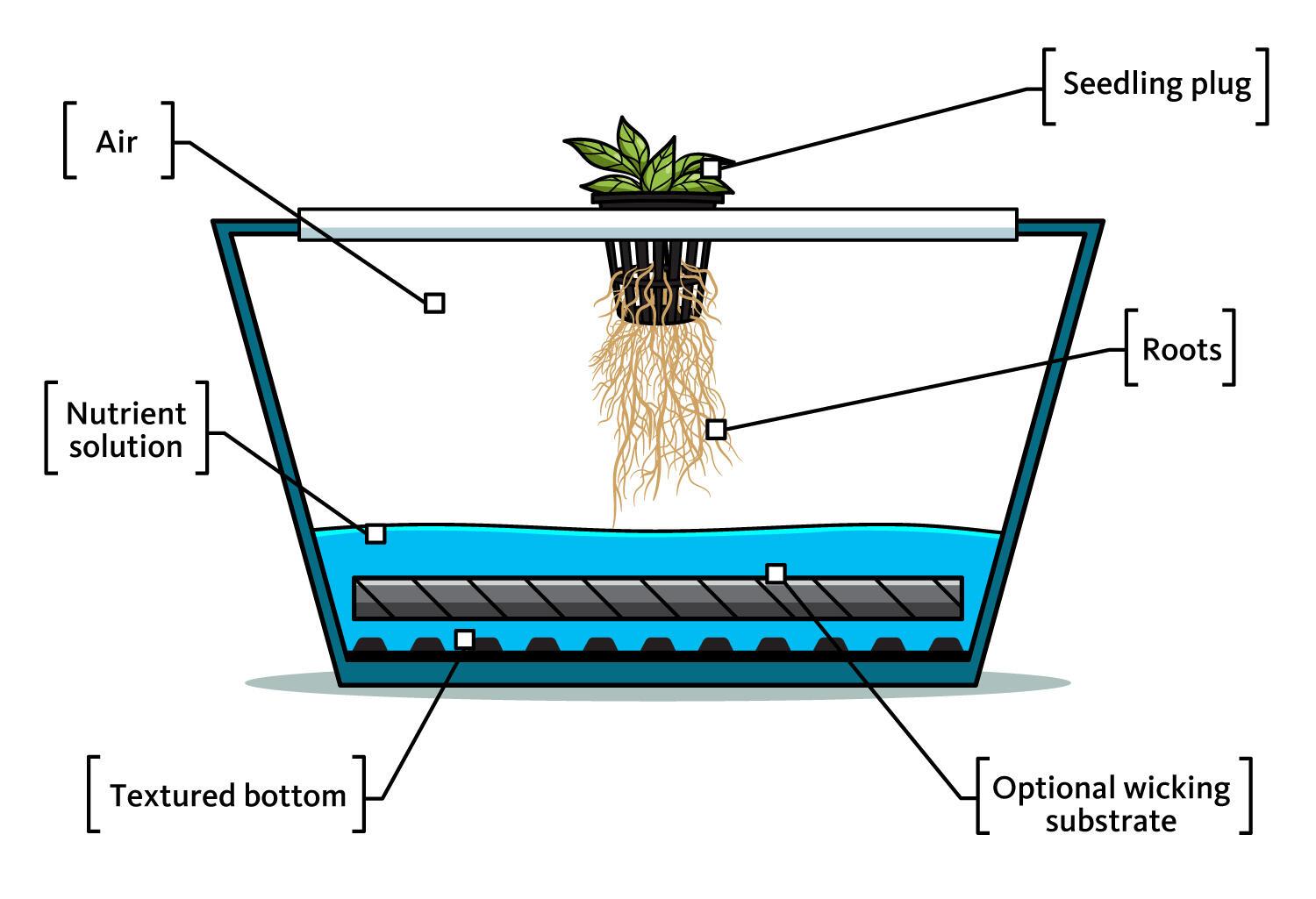
In this system, plant roots are suspended in nutrient-rich water. Air pumps supply oxygen.
Best for: Beginners, leafy vegetables
Advantages: Simple, affordable, effective
Risk: Oxygen failure can damage crops quickly
A thin film of nutrient solution continuously flows over plant roots in sloped channels.
Best for: Commercial leafy green production
Advantages: Efficient water use, scalable
Risk: Pump failure affects entire system
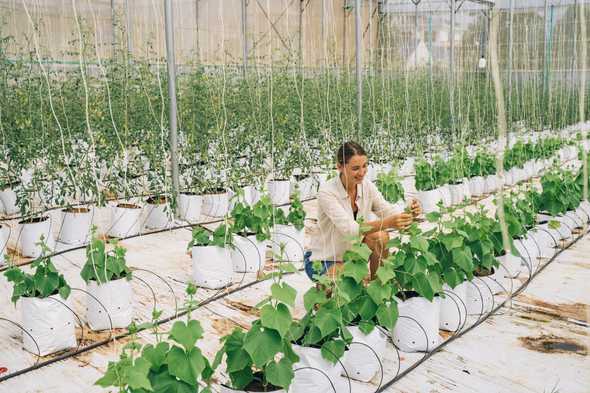
Nutrient solution is delivered directly to each plant through drip emitters.
Best for: Tomatoes, peppers, cucumbers
Advantages: High control, suitable for large farms

Roots are suspended in air and misted with nutrients.
Best for: Advanced growers
Advantages: Maximum oxygen exposure, fastest growth
Risk: Highly technical
Plants grow 30–50% faster than soil farming.
More crops per square meter due to vertical stacking.
Uses up to 90% less water than traditional farming.
Perfect for urban agriculture and rooftop farming.
Independent of seasons.
Controlled environment reduces pesticide use.
High initial setup cost
Requires technical monitoring
Electricity dependence
Rapid crop loss if system fails
Despite these challenges, long-term returns often outweigh startup costs.
Hydroponic farming works best for:
Lettuce
Spinach
Kale
Basil
Mint
Tomatoes
Peppers
Strawberries
Leafy greens are the most profitable for beginners.
Costs vary depending on scale.
Basic DWC system
Grow lights
Nutrients
Containers
NFT or drip system
Greenhouse structure
Water pumps
Monitoring tools
Automated climate control
LED grow lights
Industrial water filtration
Backup power systems
Startup investment can range from low (DIY home system) to high (commercial greenhouse).
Hydroponics offers:
Faster crop cycles
Premium produce pricing
Urban market advantage
Export potential
Sustainable agriculture positioning
Investors should evaluate:
Market demand
Distribution channels
Power supply stability
Water availability
Operational expertise
With proper management, hydroponic farming can generate strong ROI.
Hydroponic farming in Nigeria is gaining traction due to:
Increasing urban demand
Rising food prices
Climate unpredictability
Land scarcity in cities
Major cities like Lagos, Abuja, and Port Harcourt provide strong market opportunities for fresh, pesticide-free vegetables.
However, challenges include:
Electricity reliability
Initial equipment import cost
Technical skill gap
Despite these challenges, hydroponics represents one of the most promising modern agriculture investments in West Africa.
Research crop demand in your target market.
Choose a hydroponic system (DWC for beginners).
Secure a suitable space (indoor or greenhouse).
Install nutrient reservoir and pumps.
Prepare nutrient solution.
Monitor pH (5.5–6.5 ideal for most crops).
Maintain regular inspection schedule.
Establish distribution channels before harvest.
Planning before planting is critical.
| Factor | Hydroponics | Soil Farming |
|---|---|---|
| Water Usage | Very Low | High |
| Growth Speed | Fast | Moderate |
| Land Requirement | Minimal | Large |
| Pest Exposure | Low | High |
| Initial Cost | High | Low |
Hydroponics offers efficiency and control, while soil farming offers lower startup costs.
Hydroponics supports sustainability by:
Reducing water waste
Eliminating soil degradation
Minimizing pesticide use
Lowering transportation distance in urban farms
It is considered a major component of future food systems.
Ignoring pH monitoring
Overfeeding nutrients
Lack of backup power
Poor water sanitation
Starting too large without experience
Starting small and scaling gradually reduces risk.
The global hydroponics market is expanding rapidly due to:
Food security concerns
Urban population growth
Climate change pressures
Demand for organic produce
Vertical farming, smart agriculture, and AI monitoring systems are integrating with hydroponics to create highly efficient farming models.
Hydroponic farming represents a revolutionary shift in agriculture. By eliminating soil and optimizing nutrient delivery, it offers faster growth, higher yields, and sustainable food production.
From home gardeners to large-scale investors, hydroponics provides scalable opportunities in a rapidly evolving agricultural landscape.
If properly planned and managed, hydroponic farming can become one of the most profitable and sustainable farming methods of the modern era.

Quia vitae suscipit consequatur expedita odio similique similique. Modi autem et dolorem et ipsam.
Aut et doloribus in eum ut deleniti. Qui ex similique consequatur ab et maxime. Quis repudiandae pariatur natus. Voluptas aut excepturi quibusdam nisi sunt.
Quo deserunt ratione expedita non. Laborum a alias velit laboriosam et harum iste ut. Architecto fugiat aut quia et autem.